Best Motorcycle Helmets Compared
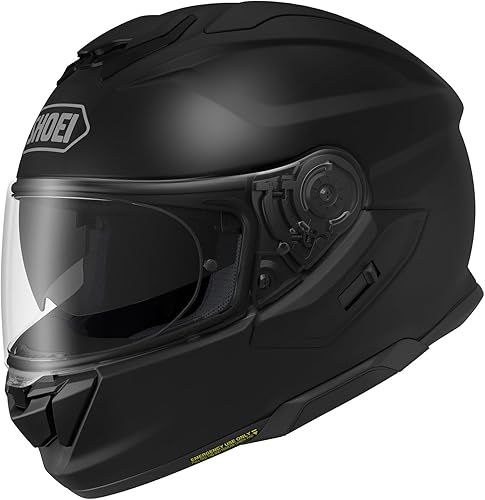
- Wind tunnel tested for optimized airflow
- Reduces wind noise and drag
- AIM shock-absorbent shell with multi-density EPS liner
- Emergency Quick Release System (E.Q.R.S.)

- Smartphone Bluetooth connectivity
- Mesh Intercom 3.0 for group riders
- WAVE Intercom compatible with any brand headset
- 2nd Generation High Definition Speakers

- Meets FMVSS 218, DOT approved
- Multi-density EPS with seven pieces in six densities
- Exceeds ECE 22.06 peak rotational acceleration standard by 80%
- Carbon, aramid and fiberglass shell with pre-preg epoxy resin
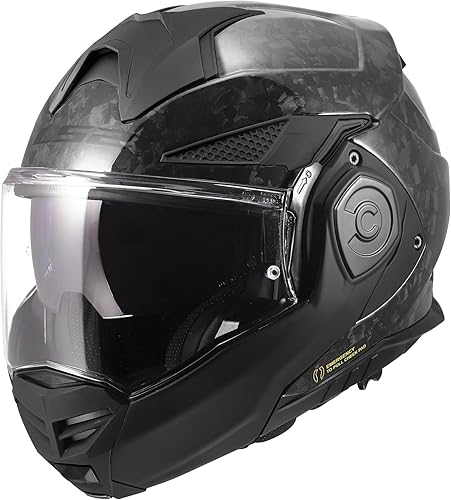
- 9K carbon fiber shell with full carbon chin bar
- Weighs 1,470g +/- 50g
- Chin bar flips fully back behind head
- ECE P/J certified as open-face and full-face

- Carbon fiber composite shell with internal EPS foam liner
- 3-year Helmet Replacement Program
- 360º Turbine Technology
- Photochromic shield and extra clear shield included

- Meets DOT FMVSS 218
- Forehead reinforced by a super fiber belt
- VAS A (Variable Axis System) face shield and side pods
- INTERMEDIATE OVAL (IO) interior fit shape
Introduction
Choosing motorcycle helmets sounds simple until you’re staring at a wall of them. Full face, modular, adventure, carbon, composite — every listing promises protection and comfort, and they all start to blur together. That’s the real problem: the specs look similar on paper, but the helmets are built for very different riders.
This guide to the best motorcycle helmets breaks down seven top options by what they’re actually designed to do. You’ll see which ones are built for touring, which for commuting, which for the track, and which for the dirt.
Start with the Shoei GT-Air 3, a full face helmet that’s wind tunnel tested to cut wind noise and drag, with an AIM shock-absorbent shell, a multi-density EPS liner, and the Emergency Quick Release System. It’s DOT FMVSS 218 approved, and it takes the optional SENA SRL 3 communication system.
The Sena Outrush 2 is the modular pick, with Bluetooth connectivity, Mesh Intercom 3.0, and WAVE Intercom compatibility that lets you talk to any brand of headset over virtually any distance within cellular network coverage. Its P/J dual homologation keeps you protected with the chin bar up or down.
The Alpinestars S-R7 A-Core is the racing option, built with a carbon, aramid and fiberglass shell and a patented low-friction slip plane. The LS2 Advant X Carbon is the modular carbon choice, with a 180-degree chin bar that flips fully back.
By the end, you’ll know which one fits your riding, not just your head.
1. Shoei GT-Air 3 Full Face Motorcycle Helmet
The GT-Air 3 is a touring helmet, and the listing leans hard into that. Shoei says the shell was wind tunnel tested to cut wind noise and drag, which is the whole point of a quiet, stable highway ride. The CNS-1C Pinlock visor comes with a Pinlock lens, so fogging is handled out of the box.
Protection is where the spec sheet earns its keep. The shell is AIM shock-absorbent, backed by a multi-density EPS liner, and it carries the Emergency Quick Release System, or E.Q.R.S. The helmet is DOT FMVSS 218 approved.
Airflow runs through multiple intake and exhaust vents, and an insect filter sits in the path so bugs don’t end up against your face on a summer ride.
Fit is adjustable rather than fixed. A 3D center pad plus cheek pads in various thicknesses let you tune the interior to your head shape instead of settling for whatever ships in the box.
Pros
- AIM shock-absorbent shell with multi-density EPS liner and the Emergency Quick Release System
- Wind tunnel tested for reduced wind noise and drag
- Pinlock lens included with the visor
- Multiple intake and exhaust vents with an insect filter
- 3D center pad and cheek pads in various thicknesses for a personalized fit
Cons
- The SENA SRL 3 communication system is optional and sold separately, so it’s not included in the box
Best for: touring riders who want a quiet, stable helmet and plan to add comms later.
2. SCHUBERTH C5 Solid Ece Unisex Helmet

The SCHUBERTH C5 appears here on the strength of its name and brand alone. The listing gives no feature details, so there’s nothing specific to weigh against the others. That’s not a knock on the helmet — it just means this entry can’t be compared on specs the way the rest can.
Pros
- SCHUBERTH is an established helmet brand
- Listed as a unisex model
- Solid ECE designation in the title
Cons
- No shell material, vent layout, or visor information is given
Best for: riders who already know the SCHUBERTH C5 and want that specific model.
What the title does tell you is worth separating from what it doesn’t. Three things are stated: the brand, the model, and a solid ECE designation. Two more are implied by the words used. “Unisex” tells you the listing isn’t split into men’s and women’s versions. “Solid” tells you the finish is a single color rather than a graphic scheme.
Everything past that’s missing. No shell material. No vent layout. No visor information. If you need any of those to decide, this listing won’t give them to you.
That leaves one question worth asking before you buy: do you already know this helmet? If you have worn a C5, or sat with one in a shop, the listing is enough — you’re confirming the model and the finish, and the brand name carries the rest.
If you have not, the listing isn’t enough, and no amount of reading it twice will change that. You would be buying on the SCHUBERTH name and the ECE designation alone.
The mistake here is treating a thin listing as a neutral signal. It isn’t one. A listing with no feature details tells you nothing about the helmet either way — it isn’t evidence of a stripped-down model, and it isn’t evidence of a loaded one. Riders who read silence as a warning talk themselves out of a helmet they may have wanted. Riders who read it as a green light buy blind.
Neither reading comes from the page. The page only has the brand, the model, the finish, and the certification.
3. Sena OUTRUSH 2 Modular Smart Motorcycle Helmet with Bluetooth Connectivity
This one is a modular helmet with the electronics built in. Sena put Bluetooth connectivity and Mesh Intercom 3.0 right into the helmet, so you don’t buy a separate comms unit. It’s also WAVE Intercom compatible, which the listing says lets you talk to any brand of motorcycle headset over cellular network coverage.
Pros
- Bluetooth and mesh intercom built in, no separate unit needed
- 2nd Generation High Definition Speakers for music
- P/J dual homologation, so it’s certified with the chin bar up or down
- Intelligent Power Management shuts the helmet off if no movement is detected after several hours
- Meets FMVSS 218
Cons
- Mesh range depends on cellular network coverage for the WAVE feature
Best for: group riders and commuters who want comms and music without a separate device.
4. Alpinestars S-R7 A-Core Helmet Men’s
The S-R7 is a racing helmet, and the listing is unusually specific about the safety engineering. Alpinestars says the multi-density EPS inner shell uses seven pieces in six densities plus a patented low-friction slip plane, and that this lets the helmet exceed the ECE 22.06 peak rotational acceleration standard by 80%. The outer shell is a multi-composite build with pre-preg epoxy resin and layers of carbon, aramid and fiberglass.
Pros
- Meets FMVSS 218 and is DOT approved for on road and off road use
- Seven-piece, six-density EPS with a patented low-friction slip plane
- Collarbone recesses with dual PLASMA inserts
- Patented A-Head micro-adjustable fitment and size-specific EPS
- Optical Class 1 shield with 220° peripheral and 57° vertical vision
- Pinlock lens, breath deflector, chin curtain and helmet soft bag included
Cons
- It’s a full face race helmet, so there’s no modular chin bar
Best for: track and performance riders who want the most detailed safety spec in this group.
5. LS2 Helmets Advant X Carbon Modular Helmet
The Advant X is the modular option with a carbon shell. LS2 says it’s built from 9K carbon fiber with a full carbon chin bar, and the listing gives the weight as 1,470g +/- 50g. That figure is the reason to pick this one over a standard modular: less weight on your neck over a long day.
The 180-degree modular system uses a single-axis pivot, so the chin bar flips fully back and rests behind your head. ECE P/J certification covers both configurations, so the same helmet is legal as open-face and as full-face.
Pros
- 9K carbon fiber shell with a full carbon chin bar, listed at 1,470g +/- 50g
- 180-degree modular system, ECE P/J certified for open-face and full-face use
- A-Class polycarbonate shield with quick-release and a built-in sun visor
- Pinlock Max insert included
- Multi-port ventilation design
- Meets DOT FMVSS 218
Cons
- The chin bar flips behind the head, so you need to be comfortable with that rear weight position
- It’s a single-axis pivot, so the chin bar swings along one fixed arc rather than opening to several positions.
The pivot is the part to think about before you buy. A single-axis system swings the chin bar along one fixed arc, and that arc ends with the chin bar behind your head rather than above the shield.
If you ride mostly open-face and only close the chin bar for weather or highway stretches, the rear rest position is easy to live with. If you flip the bar up and down constantly in traffic, try the motion first.
Best for: riders who want a single helmet that covers both open-face and full-face riding, in a carbon shell.
6. Leatt Helmet Kit ADV 9.5 Carbon with Free 4.5 Iriz Goggles & Bag
This is a bundle, and it’s the only listing here that ships with goggles included. The ADV 9.5 Carbon uses a carbon fiber composite shell with an internal EPS foam liner and Leatt’s 360º Turbine Technology. You get a photochromic shield plus an extra clear shield, and the goggles come with the kit.
The listing includes a photochromic shield plus a clear shield as a spare, so you have a backup on hand. The clear shield is the backup for the days the photochromic one isn’t enough.
The goggles are the Velocity 4.5 Iriz, and they come with an anti-fog Pinlock 120XLT MaxVision shield.
The shell was shaped in a wind tunnel to reduce drag and lift.
The Fidlock magnetic buckle is the other detail you notice every ride.
Pros
- Carbon fiber composite shell with internal EPS foam liner
- 360º Turbine Technology
- Photochromic shield and an extra clear shield included
- Free Velocity 4.5 Iriz Goggles and a bag included
- Anti-fog Pinlock 120XLT MaxVision shield
- Fidlock magnetic buckle
- Multi-year Helmet Replacement Program
- Wind tunnel-tested shell design to reduce drag and lift
Cons
- It’s a kit, so you’re buying the goggles and bag whether you need them or not
- The bundle adds items to store and keep track of
Best for: adventure and off-road riders who want goggles, a backup shield, and a replacement program in one purchase.
7. Arai HELMET XD-5 Discovery Helmet
The XD-5 is Arai’s adventure helmet, and the listing focuses on structure and fit. Arai says the forehead area of the shell is reinforced by a super fiber belt, which it compares to the way bands strengthen a barrel. The VAS A face shield and side pods use Arai’s Variable Axis System, and the interior uses the INTERMEDIATE OVAL fit shape.
That’s a claim about the shell, not about the liner or the padding.
The VAS A system is the other piece of structure here. The listing names the VAS A (Variable Axis System) face shield and side pods without describing how they move.
Then there’s the fit shape. INTERMEDIATE OVAL sits between Arai’s other interior shapes, so it isn’t a universal fit and not a narrow one. If you already know you take a long oval or a round oval, this is the line where the XD-5 either works for you or does not, and no amount of adjustment changes that.
Pros
- Meets DOT FMVSS 218
- Super fiber belt reinforcing the forehead area of the shell
- VAS A (Variable Axis System) face shield and side pods
- INTERMEDIATE OVAL interior fit shape
- Multiple distinct configurations to change the look and setup
Cons
- The INTERMEDIATE OVAL fit shape won’t suit every head shape
- Multiple configurations mean more parts and settings to learn
Best for: adventure riders who want a configurable helmet and a specific interior fit shape.
Related guides
FAQ
What’s the difference between a full face and a modular helmet?
A full face helmet has a fixed chin bar, like the Shoei GT-Air 3 and the Alpinestars S-R7. A modular helmet has a chin bar that flips up or back, like the Sena OUTRUSH 2 and the LS2 Advant X. Modular helmets let you ride open-face at low speed, and both of those models are certified for use with the chin bar up or down.
Do I need a Pinlock lens, or is it optional?
Pinlock is an anti-fog insert that fits inside the visor. Several helmets here include one: the Shoei GT-Air 3, the Alpinestars S-R7, the LS2 Advant X, and the Leatt ADV 9.5. If you ride in cold or wet weather, a Pinlock lens is the difference between clear vision and a fogged-up shield.
What does DOT FMVSS 218 mean?
It’s the US federal safety standard for motorcycle helmets. A helmet that meets FMVSS 218 has passed the impact and penetration requirements set by that standard. The Shoei, Sena, Alpinestars, LS2, Leatt, and Arai listings here all state they meet it.
What’s the difference between ECE P/J certification and regular certification?
P/J dual homologation means the helmet is approved both as a full-face (P) and as an open-face (J) helmet. That matters for modular helmets, because it confirms the helmet is certified in both chin bar positions. The Sena OUTRUSH 2 and the LS2 Advant X both carry P/J certification.
Should I get a carbon fiber helmet?
Carbon fiber shells are used to keep weight down while staying strong. The LS2 Advant X lists a 9K carbon fiber shell at 1,470g +/- 50g, and the Leatt ADV 9.5 uses a carbon fiber composite shell. Lighter weight can mean less neck fatigue on long rides, which is the tradeoff the LS2 listing points to.
Can I use a communication system with any of these helmets?
Not all of them are set up the same way. The Sena OUTRUSH 2 has Bluetooth and mesh intercom built in. The Shoei GT-Air 3 is designed to integrate with the optional SENA SRL 3 system, which is sold separately. The other listings here don’t state a comms setup, so check the specific model before you buy.
Conclusion
The most useful takeaway is that these helmets aren’t competing on the same job. Match the helmet to how you actually ride, and the choice gets much easier. Start with the certification and the fit shape, then work down to the features you’ll really use.